Criminal cases, insults and claims of foreign control: Armenia’s pre-election campaign heats up

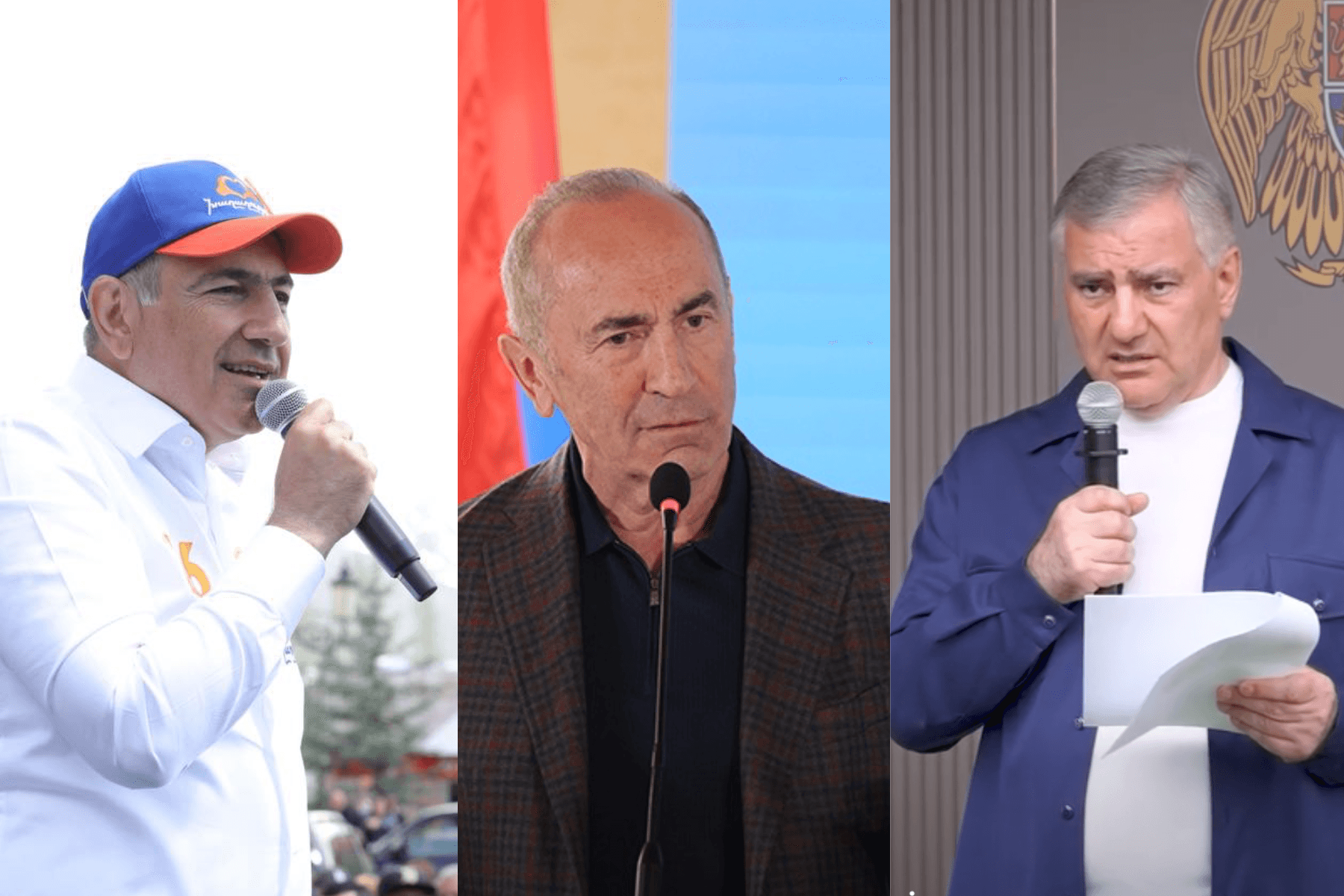
As the first week of Armenia’s official pre-election campaign period draws to an end, tensions have intensified, with further criminal charges on vote-buying allegations and insulting political rhetoric, including accusations of candidates being governed from abroad.
On Thursday, Armenian authorities announced three separate criminal cases and multiple arrests, two of which were related to alleged vote-buying.
As part of one case, an unclarified number of members and affiliates of former President Robert Kocharyan’s Armenia Alliance members were arrested in Spitak, Lori province.
Authorities alleged that the head of the alliance’s local office provided charitable assistance while a legislative ban on charity activity was in force ahead of the parliamentary elections scheduled for 7 June. The same individual, together with others, is also accused of having ‘hindered the free exercise of the electoral right of a resident of the same region, which was manifested by the threat of violence against the latter’.
It was the first such criminal case against the Armenia Alliance, which rejected the allegations, calling the case ‘not a legal process, but another cheap attempt to obstruct the normal functioning of our structures’.
The alliance also said that ‘through such methods, the authorities are trying to create an atmosphere of fear’, describing Prime Minister Nikol Pashinyan’s government as an ‘authoritarian regime’.
Separately, Armenian police reported that a man was arrested in Yerevan on Wednesday while handing over ֏50,000 ($135) to another person as an alleged electoral bribe. Authorities did not disclose which political party the case was affiliated with.
In another case, Armenian authorities arrested and launched an investigation against one man after he posted an online address on Tuesday containing insults directed at Pashinyan. A criminal case was opened under charges of public speech aimed at inciting or propagating hatred, discrimination, intolerance, or hostility.
 Arshaluys Barseghyan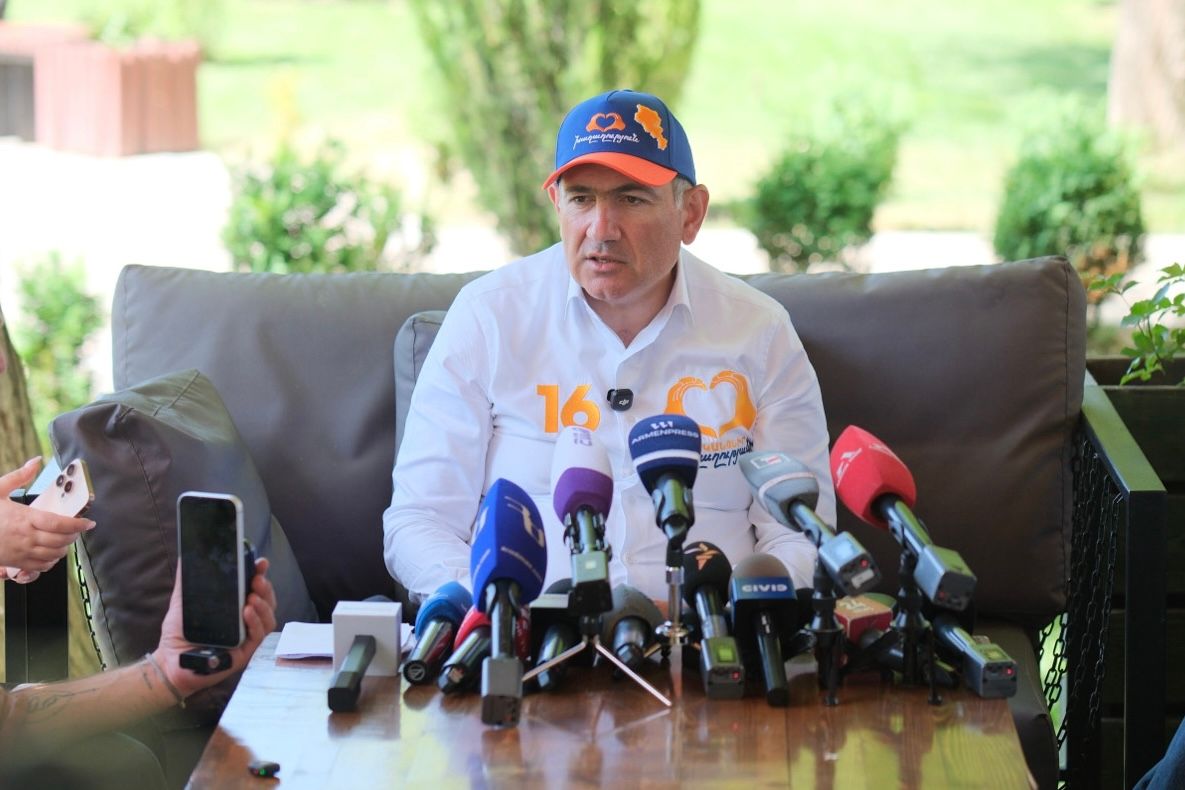
On Thursday, Pashinyan praised Armenia’s law enforcement agencies for ‘effectively combating’ electoral bribery.
The following day, as part of a trend over recent months, more arrests of Russian–Armenian tycoon Samvel Karapetyan’s Strong Armenia Alliance members or affiliates were reported.
‘Lackey’ rhetoric and claims of external control
Beyond the detentions, Kocharyan, in a heated exchange on Thursday called Pashinyan a ‘lackey’. Pashinyan later used the same term in his response.
Kocharyan claimed that no one in Armenia’s history had previously spoken ‘against [national] identity and the Church’ — ‘Hey [you] lackey, what do you have against it? What is forcing you? In all seriousness, why are you hurting an entire nation? For whom?’, Kocharyan asked.
Arshaluys Barseghyan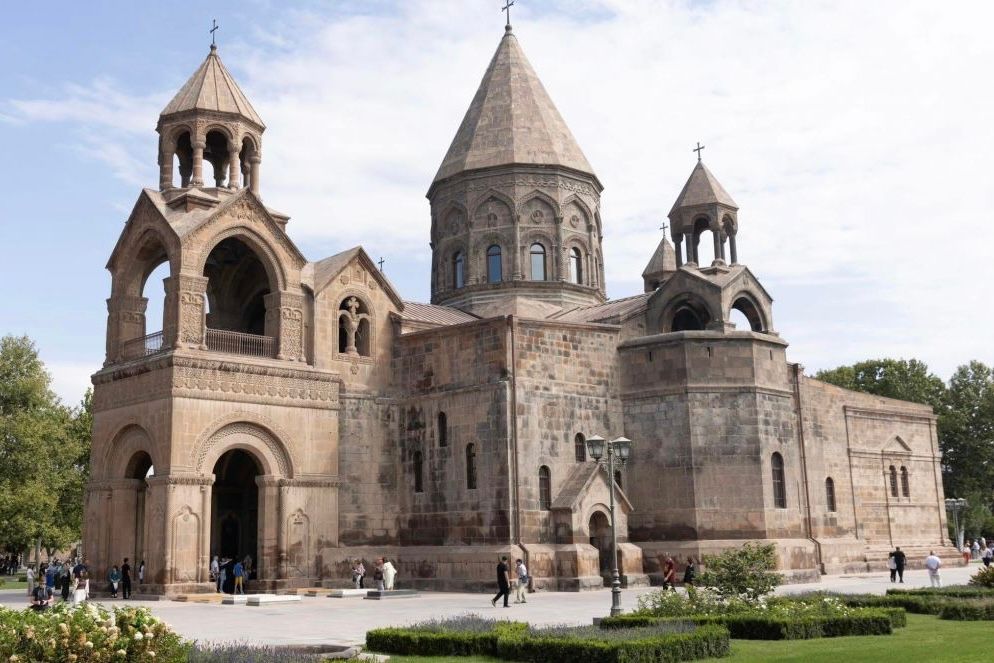
He went on to suggest that Pashinyan is being externally controlled.
‘My impression is that there is some kind of remote control, and a chip in [Pashinyan’s] head, and that head is being controlled by that remote control from somewhere — not from Armenia for sure. Now, this person, in my view, has become like [Azerbaijani President Ilham] Aliyev’s lapdog’, Kocharyan said.
He further argued that such rhetoric was a response to Pashinyan 'exceeding the limit’ in his statements.
Earlier on Thursday, Pashinyan stated that Kocharyan should be imprisoned for the bloody crackdown of anti-government protests in March 2008, which occurred while Kocharyan was in office, leaving 10 people dead. In turn, Kocharyan accused Pashinyan of being an ‘instigator and [the] main person responsible’ for those events.
Kocharyan further alleged that with three former Nagorno-Karabakh presidents imprisoned in Azerbaijan, Pashinyan had been instructed, via the ‘remote control’, to imprison a fourth one, Kocharyan, in Armenia.
Before moving to Armenia, Kocharyan served as President of Nagorno-Karabakh from 1994 to 1997.
‘Kocharyan said that the word lackey is accepted in the Civil Contract party. That is correct, because when we talk about him, that is exactly the word we use — lackey’, Pashinyan said in his response via a Facebook video on Thursday evening.
In another video, he challenged Kocharyan to write the word ‘identity’ live on air, in what appeared to be a jab at Kocharyan’s language skills.
Arshaluys Barseghyan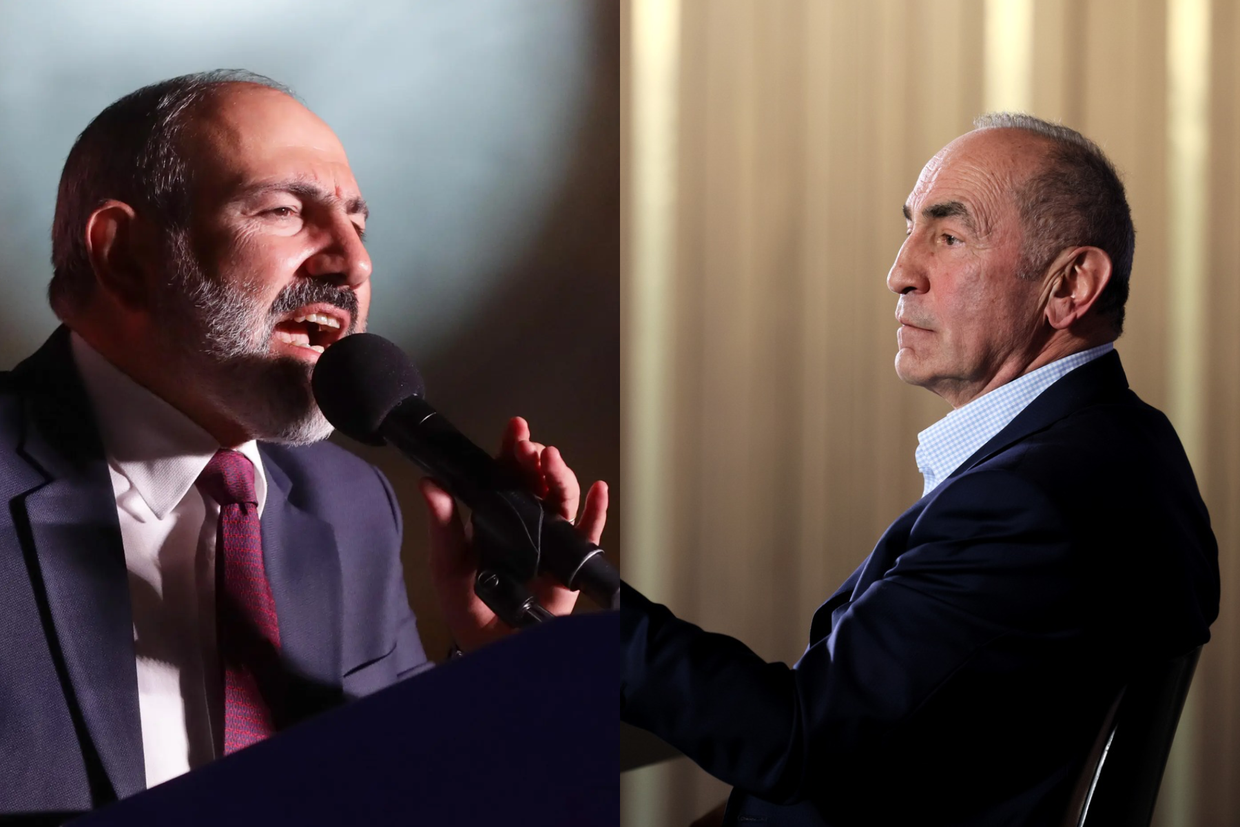
‘Western Azerbaijan’ vs Union State
Karapetyan, whose Strong Armenia Alliance is expected to be the main challenger to Pashinyan’s Civil Contract in the upcoming elections, also claimed on Thursday that Armenian border villages have been depopulated due to demographic trends. He further alleged that 300,000 Azerbaijanis would be settled in Armenia in the event of Pashinyan’s re-election.
The claim of the Azerbaijani settlement in Armenia has become a recurring talking point among Karapetyan and other opposition figures. In turn, Pashinyan has dismissed the allegations, calling them a ‘lie’.
‘Such an issue has never been on our agenda with Azerbaijan, nor on our broader international agenda. These people are now spending millions of dollars to create and inject this agenda into the political life of the Republic of Armenia. Only foreign spies operate in this way’, Pashinyan said on Friday.
Aside from the politicians’ statements, AI-generated videos have also circulated online, including claims that under Pashinyan’s re-election, Armenia would become ‘Western Azerbaijan’, or under opposition rule, Armenia would enter a ‘union state’ with Russia and Belarus.
In recent years, Azerbaijan has launched a campaign centred around the concept of ‘Western Azerbaijan’ — a term that refers not to its own territory, but to some, or all of the Republic of Armenia.
Rasmus Canbäck
For ease of reading, we choose not to use qualifiers such as ‘de facto’, ‘unrecognised’, or ‘partially recognised’ when discussing institutions or political positions within Abkhazia, Nagorno-Karabakh, and South Ossetia. This does not imply a position on their status.