The Georgian government has vowed to establish a special department within the Interior Ministry to monitor speech and penalise what it deems ‘hate speech, abusive campaigns, aggressive communication in the public sphere’. Critics have deemed the planned moves as another potential expansion of state censorship.
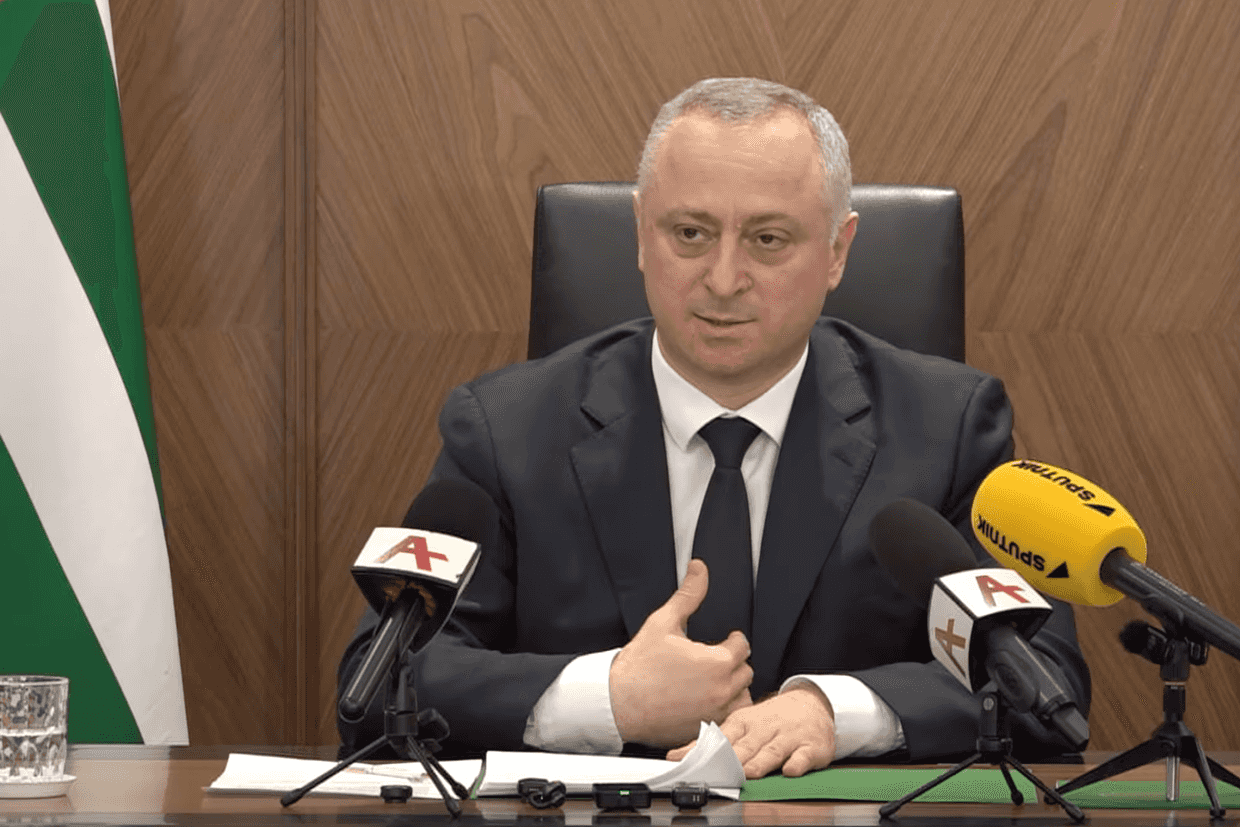
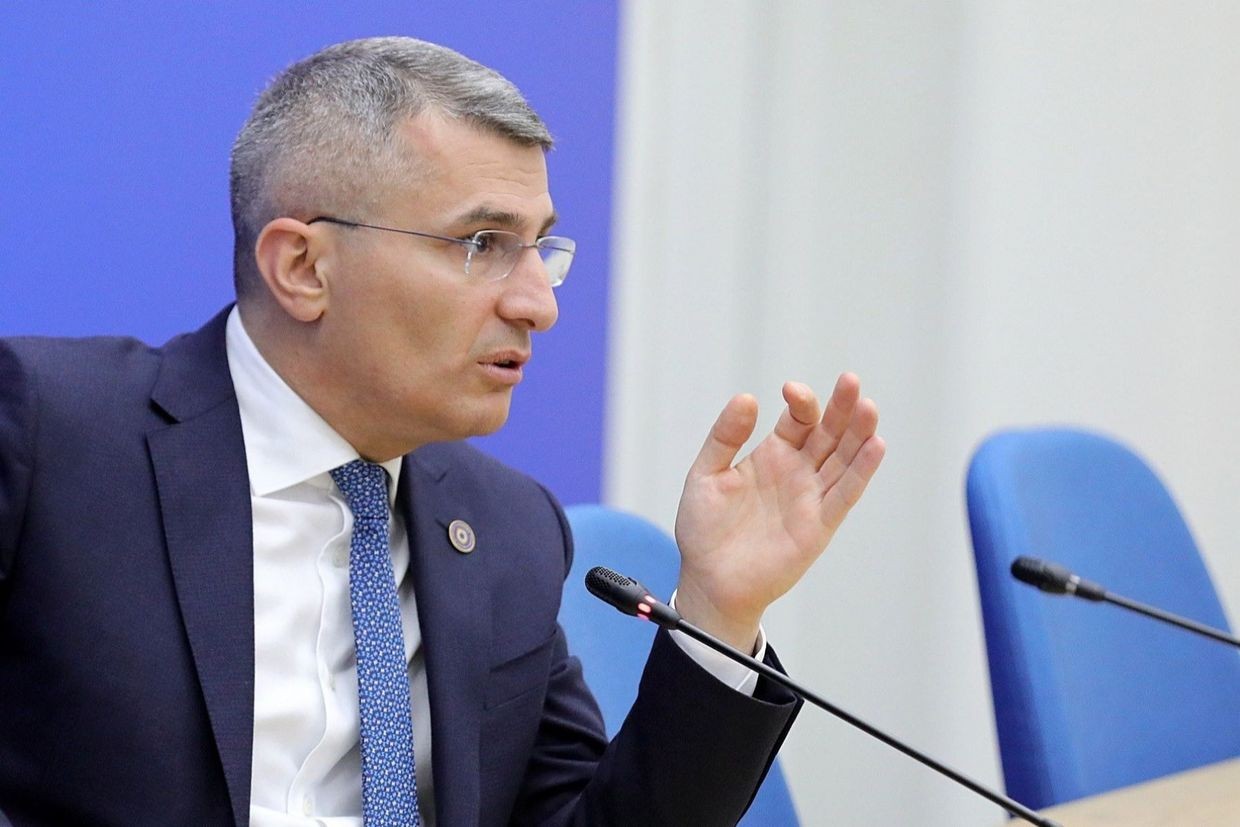
The plan was announced on Monday by Mamuka Mdinaradze, who currently holds the newly created government position of State Minister for Coordination Among Law Enforcement Agencies. He previously headed the State Security Service of Georgia (SSG) and, before that, served as the parliamentary leader of the ruling Georgian Dream party.
Mdinaradze noted that his office and the Interior Ministry had agreed to establish the new department following ‘detailed’ consultations.
According to Mdinaradze, the department’s remit will cover ‘any type of public communication’ that the state deems punishable, and it will operate ‘proactively’, meaning its work will not depend solely on complaints filed by concerned individuals.
‘The agency itself will carry out monitoring, prepare legal assessments, and, if necessary, forward the materials to court’, he said.
Mdinaradze said the creation of the department would not be accompanied by amendments to legislation, arguing that ‘the relevant legal framework already exists and is already being enforced’.
He did not specify which legislation he was referring to. However, in February 2025, the ruling party adopted legislative changes which classified insulting state and political officials as an administrative offence. The amendments made such acts punishable by fines or administrative detention of up to 45 days for a first offence and up to 60 days in cases of repeat offences.
In the subsequent period, Georgian courts fined a number of government critics for posts and comments, with some also sentenced to days-long detention.
This was one of several restrictive legislative amendments through which, over the past two years, the ruling party has targeted critics, including media, civil society, activists, and the political opposition.
‘Censorship’
Mdinaradze’s announcement was welcomed within the ruling party, with Kakha Kaladze, the party’s secretary general and the mayor of Tbilisi, stating that ‘unimaginable things are happening on social media [...] offensive posts and statements’.
‘Of course, all of this needs to be regulated, and there must be mutual respect’, he said.
Commenting on the initiative, Georgian Dream MP Davit Matikashvili echoed the party’s established rhetoric and claimed that hate speech in Georgia has been ‘imposed from abroad’ — by ‘foreign-funded NGOs and propaganda TV channels’.
‘Therefore, it is natural that the existing legal framework should be effectively enforced, as this is a positive obligation of the state’, he added.
Opponents and critics rejected the government’s justification, with some pointing to the ruling party’s own role in fostering aggressive and confrontational rhetoric in public discourse.
While noting an ‘unacceptable level’ of ‘hate and hateful language’ in politics from ‘all sides’, Natia Mezvrishvili, a former Georgian Dream official who is currently a representative of the opposition For Georgia party, said that ‘when the main creator of hate speech is the one trying to “regulate” it, that is called censorship’.
The chair of the Georgian Young Lawyers’ Association (GYLA), Tamar Oniani, highlighted the legislative changes regarding insulting officeholders while assessing the government’s new plan.
‘It appears that an institutional mechanism for the systematic control of dissent is being introduced. However, the substance of this is not new, and its legal framework, among other elements, was established in 2025’, she said.
Oniani referred to the OSCE/ODIHR opinion from November 2025, which described the wording of the regulation as creating risks for arbitrary enforcement.
‘Politicians and public officials do not have a privileged status that protects them from strong criticism. The announced mechanism appears to function as a form of censorship and has nothing to do with balancing interests in a democratic society’, she added.
Mdinaradze himself rejected an intention of censorship, stating that ‘the aim of this decision is not to restrict freedom of thought or expression in any form’.
He did not specify the exact timeline for establishing the department, but said it would be done ‘within a few weeks’. He also did not define what specific mechanisms the new department would use to monitor both online and offline spaces.