Gunba focuses on economy and Russian relations in first major press conference since 2025 election

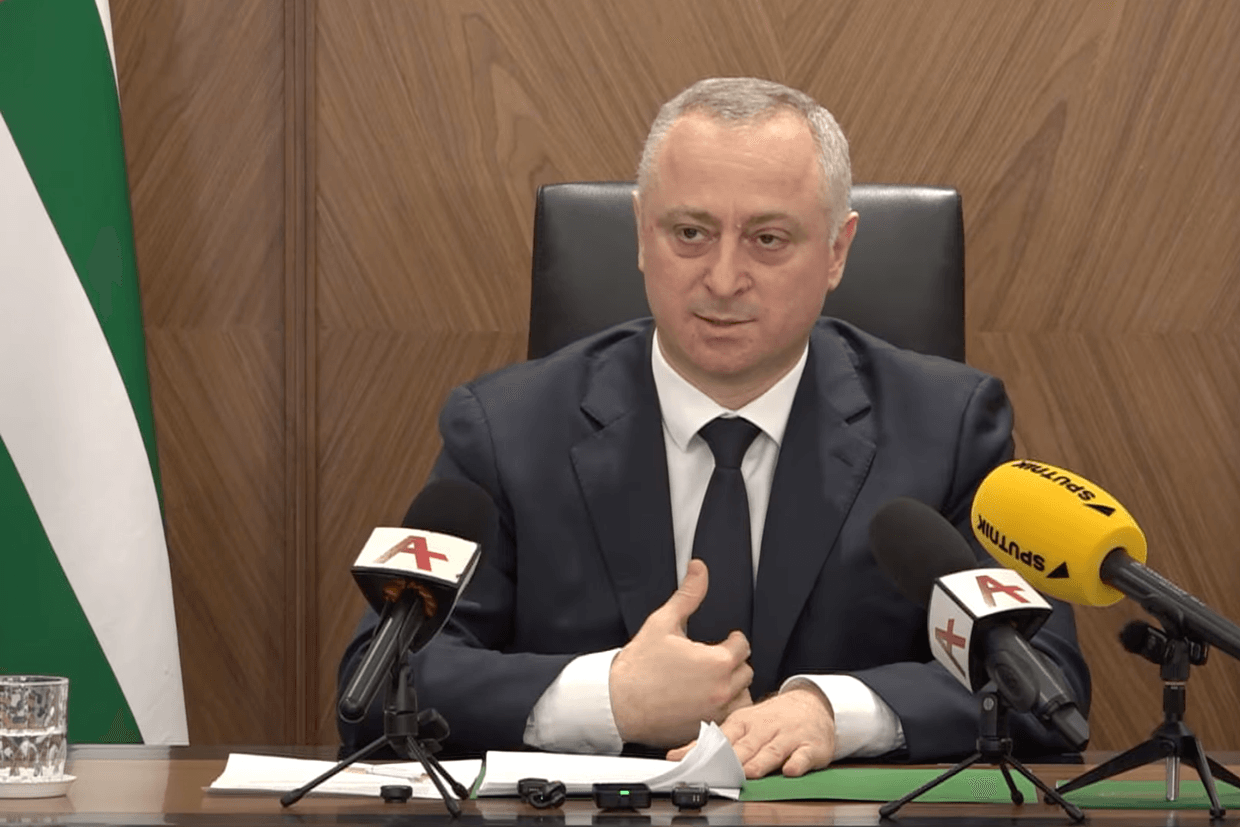
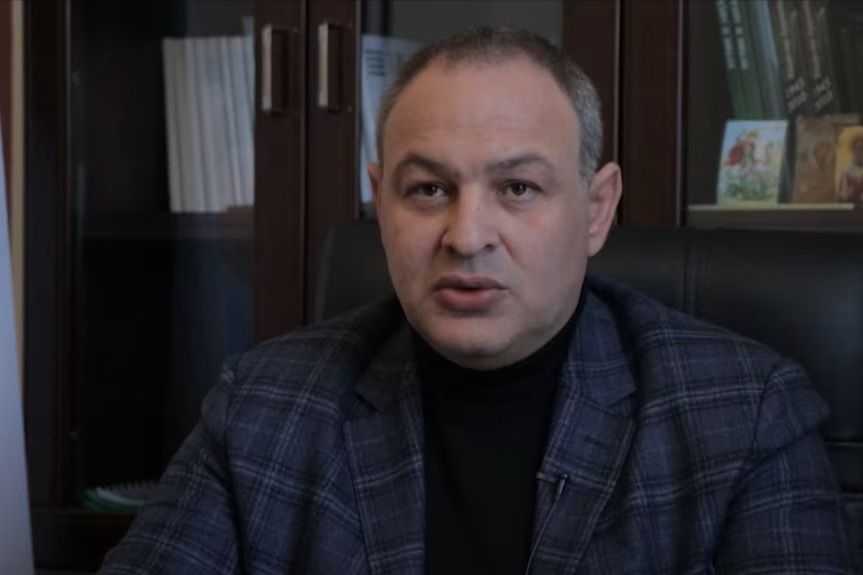
Abkhazian President Badra Gunba has hosted his first major press conference since being elected in March 2025. Though formally dedicated to what the government has achieved over the last year, it became instead a detailed discussion of the state of the economy, infrastructure limitations, and Abkhazia’s dependence on external factors, primarily regarding interactions with Russia.
Gunba began his press conference on 15 May by listing the positive statistics, including GDP growth of more than 30%, an increase in budget revenues to ₽21.7 billion ($300 million), and in increase in the share of domestic revenues to over 61%.
The very first question by a journalist about inflation and rising prices, however, soon shifted the focus of the conversation, revealing that the macroeconomic figures conceal a more vulnerable economic structure, where growth largely coexists with limited stability and a significant shadow economy.
Indeed, Gunba directly acknowledged the impact of inflation in reducing citizens’ real incomes, noting that inflation was ‘growing annually’ and that this was a trend ‘observed not only in Abkhazia, but also in neighbouring countries, and its causes are quite obvious’.
In terms of the government’s response, Gunba outlined raising public sector salaries and attempts to stimulate the private sector. But the key focus was elsewhere: the need to bring the economy out of the gray zone.
One of the key tools for this was identified as a large-scale tax administration reform and the introduction of cash register equipment. According to Gunba, the process of installing over a thousand cash registers has already begun, despite resistance from some businesses.
‘The state can no longer allow the economy to remain in the gray zone. Compromise is impossible here’, Gunba emphasised.
Moving on, Gunba devoted an entire section of the press conference to energy, one of Abkhazia’s most sensitive topics.
‘Each of you remembers 2024, when rolling blackouts lasted from 10 to 12 hours. Each of you experienced firsthand how difficult it is to live without heat and light’, Gunba said.
He went on to emphasise that the energy system is experiencing chronic deficits, and grid losses require not only technical solutions but also stricter oversight. In response, the government has announced the reconstruction of substations, the renewal of power lines, and the introduction of consumption metering.
At the same time, however, Gunba also noted that a significant portion of the current stability is ensured by support from Russia.
‘This is a huge support. If you translate it into monetary terms, it’s more than ₽2 billion rubles ($28 million)’, he said.
 OC Media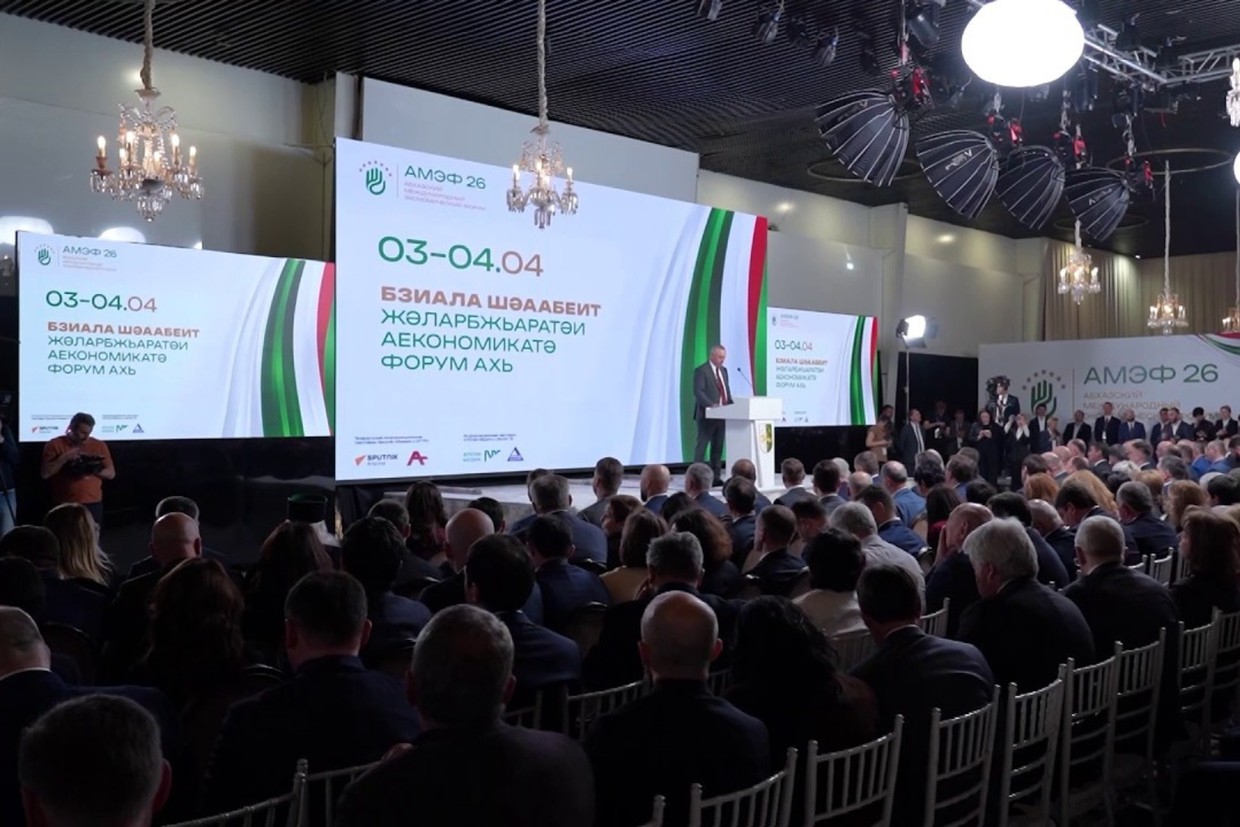
Gunba also paid special attention to logistics, putting the launch of the airport in Sukhumi (Sukhum) at the forefront, and stating that the restoration of air travel should become a key driver of the economy.
He also focused on the development of transit routes through Abkhazia, the modernisation of railway lines, and increased transit through maritime infrastructure, including the Ochamchire (Ochamchira) port. Gunba made it clear the government expects an increase in tax revenues, job creation, and increased tourism as a result of these developments, yet, essentially, these adjustments are an attempt to transform Abkhazia into a more active regional transport hub through Russian participation and investment.
Beyond more monetary assistance, a significant portion of the press conference was devoted to interactions with Russia in the social sphere. One of the most sensitive issues in this regard has been the situation of Abkhazian citizens who received payments and maternity capital in Russia and subsequently faced legal consequences.
For me personally, this is a priority issue’, Gunba noted, adding that work was underway on legal mechanisms to resolve the problem.
Gunba also separately thanked his Russian colleagues for their participation in the search for solutions, emphasising that the dialogue on social guarantees will continue.
OC Media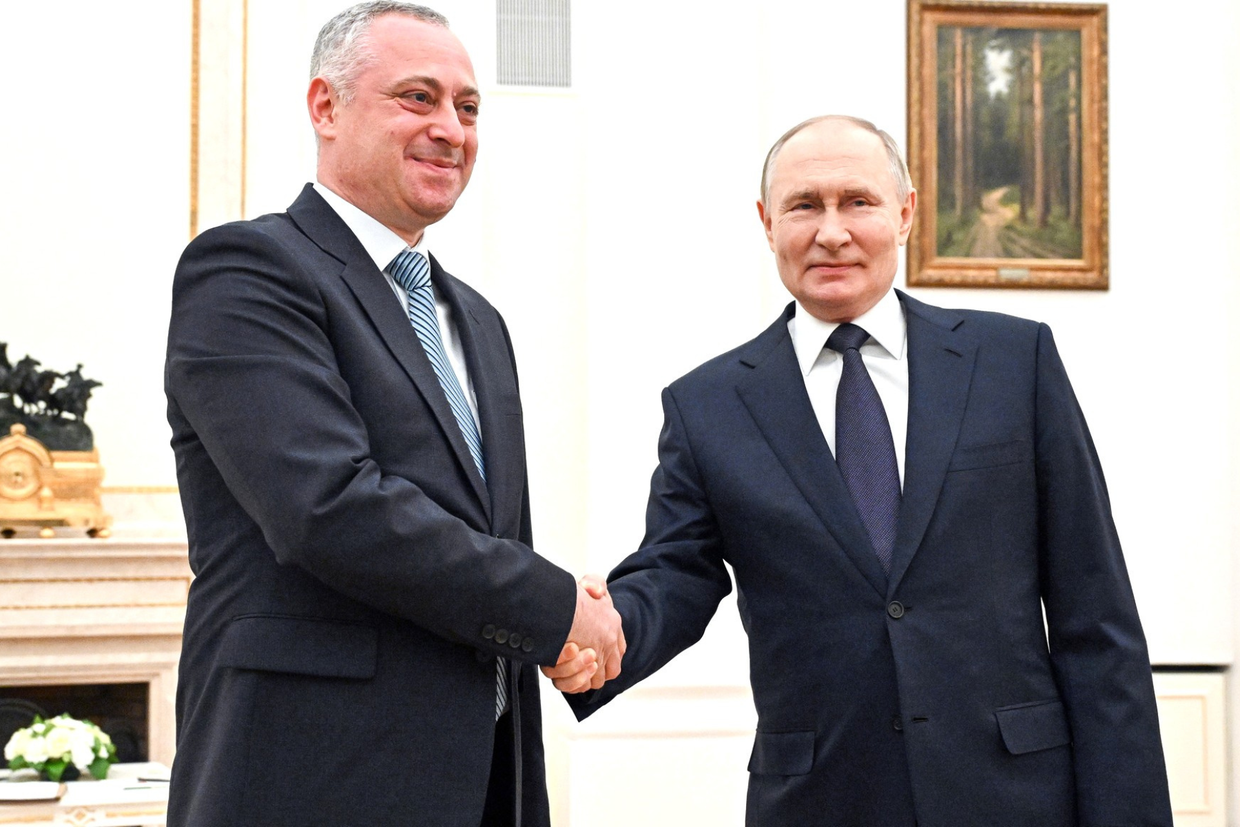
Finally, Gunba discussed demographic policy and repatriation, acknowledging that the current model has not produced the expected results.
‘We need to reset the entire repatriation concept. This applies not only to Turkey, but also to Russia, as well as to interaction with the Abaza communities in the North Caucasus’, Gunba said.
At the same time, his speech also suggested a broader shift in approach, from the idea of resettling repatriates in separate enclaves to a more integrative model that entails cohabitation and inclusion in existing social structures, including support for young families within the country.
Gunba’s speech overall appeared to paint a dual picture: on the one hand, growth in macroeconomic indicators, budget expansion, and the launch of infrastructure projects; on the other, recognition of structural constraints: inflationary pressure, the shadow economy, energy shortages, and high dependence on external support.
For ease of reading, we choose not to use qualifiers such as ‘de facto’, ‘unrecognised’, or ‘partially recognised’ when discussing institutions or political positions within Abkhazia, Nagorno-Karabakh, and South Ossetia. This does not imply a position on their status.