Georgian and Ukrainian foreign ministers meet again in latest sign of warming ties

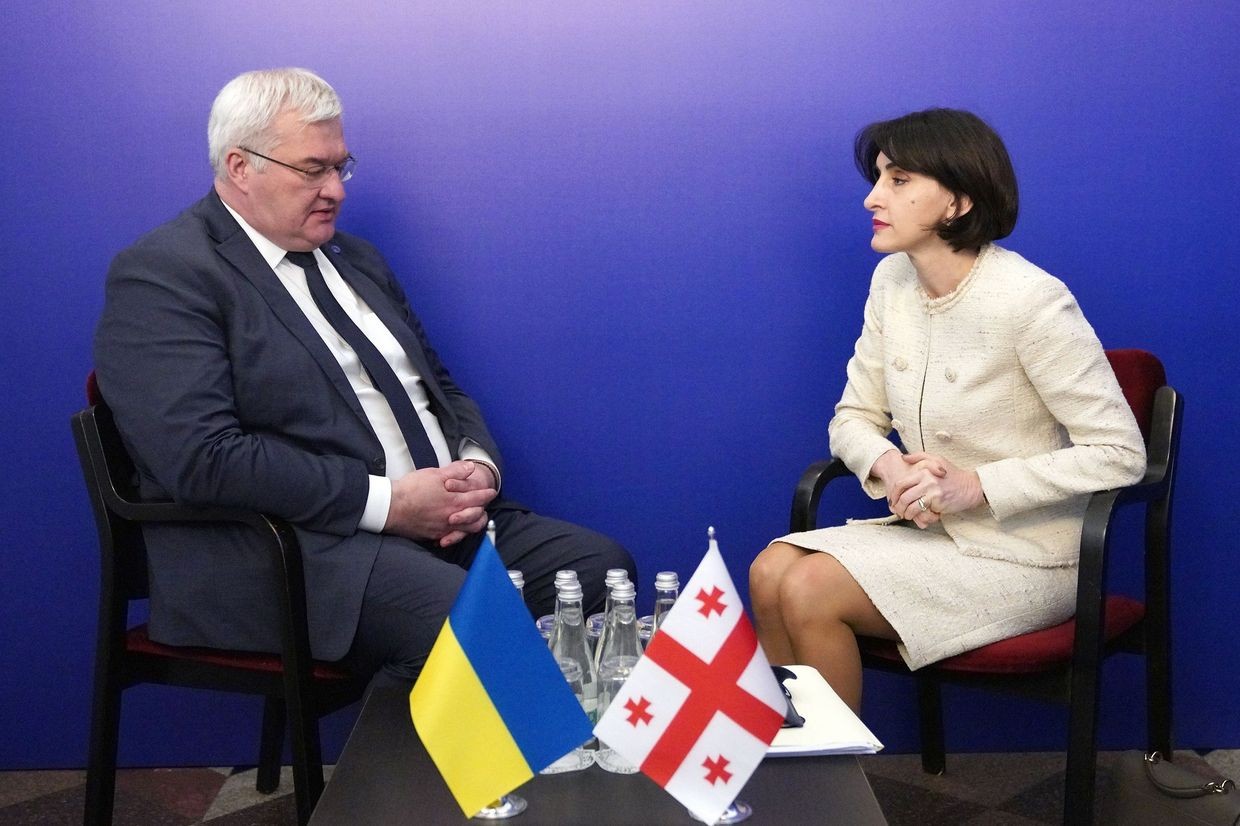
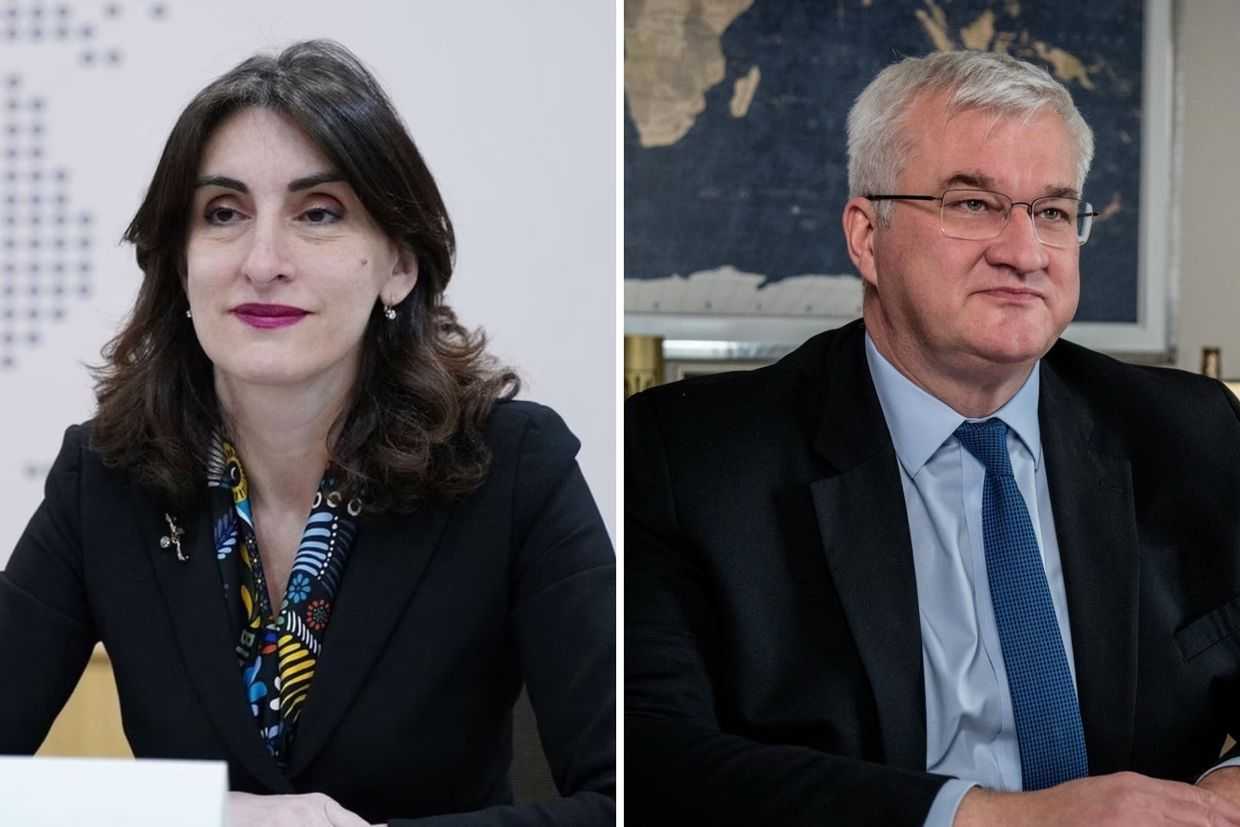
Georgian Foreign Minister Maka Botchorishvili and her Ukrainian counterpart Andrii Sybiha met in Moldova amid recently increased communication between the two countries. The latest meeting comes against the backdrop of tensions in recent years, with the prospects for normalisation still remaining vague.
Botchorishvili and Sybiha met on Friday in Chișinău, where the 135th session of the Council of Europe’s Committee of Ministers was taking place.
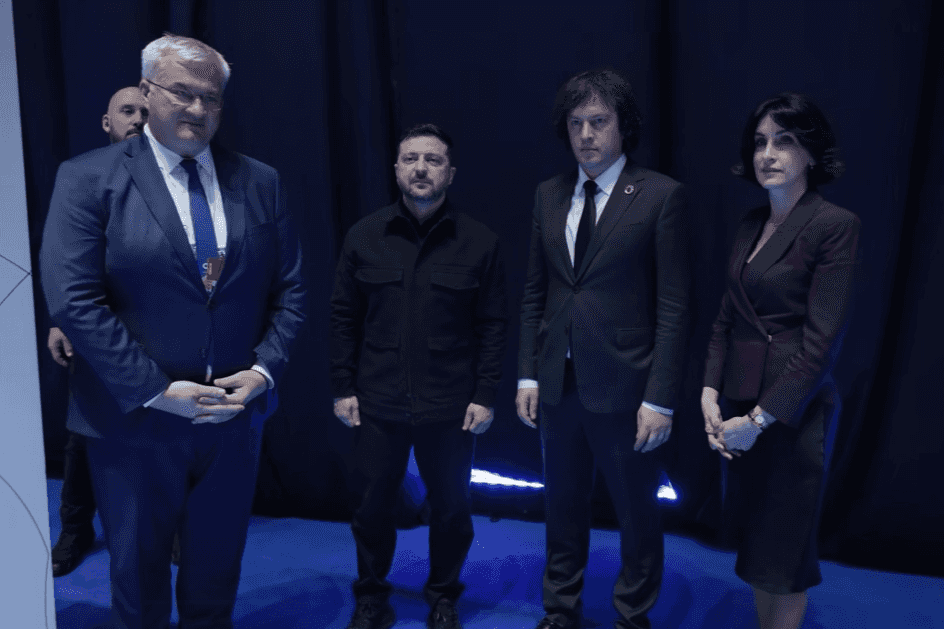
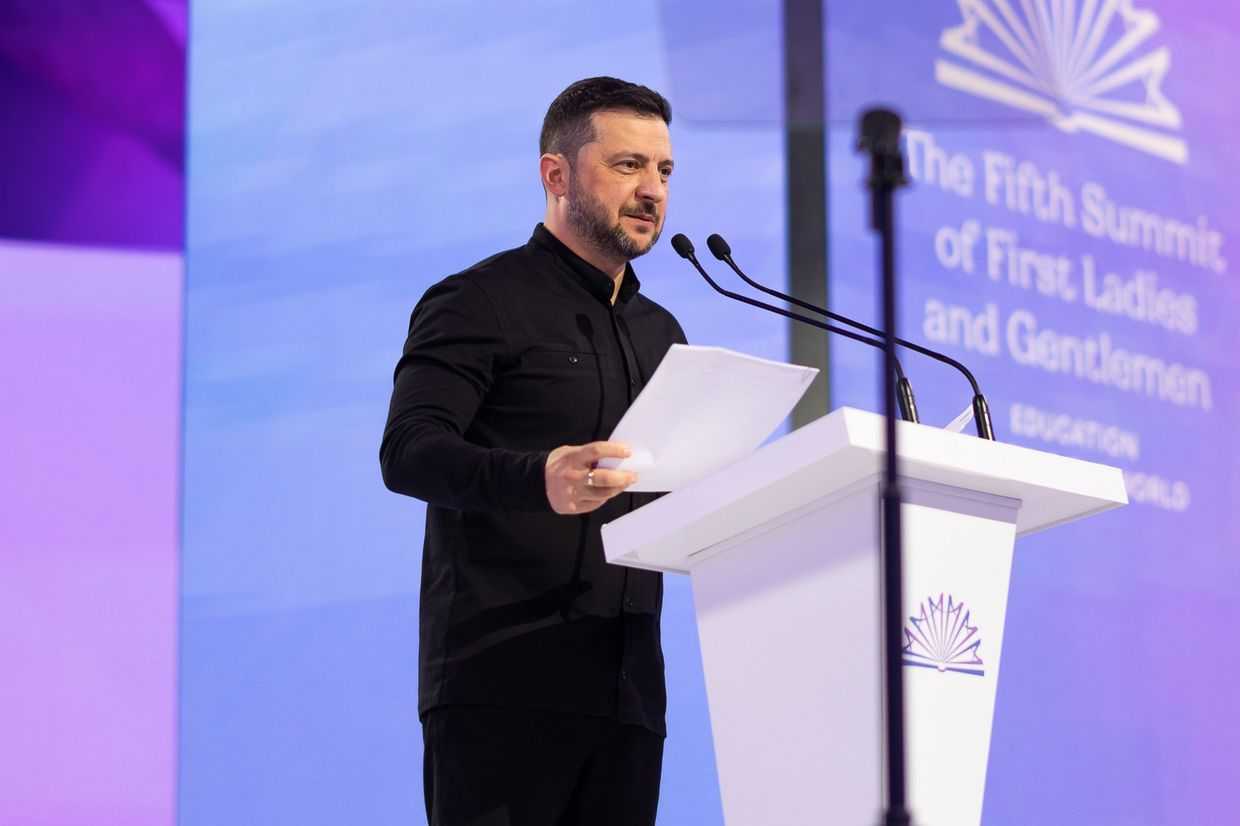
Commenting on the meeting on social media, Sybiha described it as a ‘direct follow-up’ to the ‘recent dialogue’ between Georgian Prime Minister Irakli Kobakhidze and Ukrainian President Volodymyr Zelenskyi on 4 May. The brief conversation happened on the sidelines of the European Political Community Summit in Yerevan.
‘We discussed a wide bilateral agenda, our cooperation within international organisations, in particular GUAM [Organisation for Democracy and Economic Development] and the latest political dynamics in the shared values-base space from Europe to the South Caucasus’, He noted, adding:
‘We continue to develop a transparent, pragmatic, and constructive Ukrainian-Georgian dialogue’.
In its turn, the Georgian Foreign Ministry noted that ‘the discussion focused on Georgia’s consistent political and humanitarian support for Ukraine’.
‘The meeting represented a further step following the recent communications between representatives of the governments of Georgia and Ukraine’, the statement read.
However, the statement also included apparent criticism of Kyiv. While noting that the Georgian side underscored ‘the existing challenges in Georgia–Ukraine relations’, the ministry referred to what it called ‘steps taken by the Ukrainian authorities in recent years and positions that continue to hinder the normalisation of bilateral relations’.
The meeting in Chișinău was likely arranged during a phone call between the two ministers held on 6 May. Earlier, Botchorishvili and Sybiha also met at the Yerevan summit — at the same event where Kobakhidze and Zelenskyi also spoke briefly, marking the beginning of a notable increase in engagement between Kyiv and Tbilisi.
 Mikheil Gvadzabia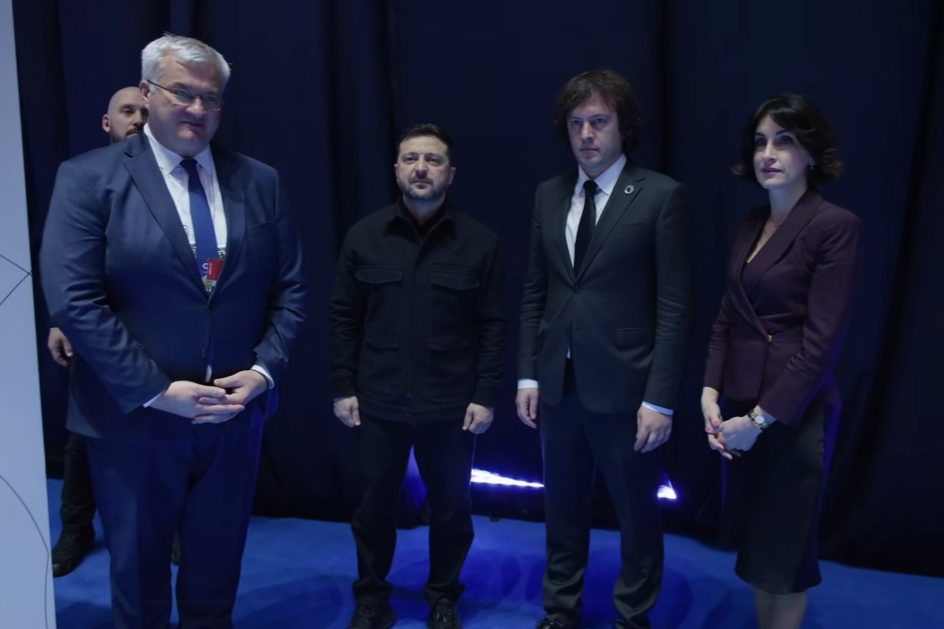
The increased contacts has strengthened discussions for normalising relations. The Georgian side has repeatedly emphasised that the initiative is ‘coming from the Ukrainian side’.
Botchorishvili told pro-government media that the context of Kyiv’s ‘activation’ relates to ‘Georgia’s role in connectivity’, suggesting that Ukraine may have certain ‘needs’ in its relations with other states through Tbilisi.
At the Council of Europe event where Sybiha and Botchorishvili met, 36 countries out of 46 expressed their intention to join a new tribunal to investigate Russian aggression towards Ukraine.
A number of countries, including Georgia, did not join the initiative. Explaining the reasons, Botchorishvili pointed the finger at the EU, saying:
‘The attitude of some EU member states towards Georgia does not give us the possibility or luxury of making certain decisions that would create additional risks and threats for our country’.
Georgian Dream MP attacks Zelenskyi
Once close allies, Georgia’s relations with Ukraine have soured in recent years, including due to Zelenskyi’s relationship with Georgia’s former president Mikheil Saakashvili and his allies, as well as the ruling Georgian Dream party’s rhetoric amid Russia’s full-scale invasion of the country.
In March 2022, days after the beginning of the invasation, Kyiv recalled its ambassador to Tbilisi. At the time, Zelenskyi cited what he described as the Georgian government’s ‘immoral position’ on sanctions against Russia, as well as Georgia’s decision to block a charter flight intended to transport Georgian volunteer fighters to Ukraine.
In the context of war, the ruling party often refers to the ‘deep state’ and ‘global war party’ — two nebulous terms that regularly feature in Georgian Dream’s conspiracy theory-tinged rhetoric. According to the party, these shadowy forces have infiltrated political circles in the West, dragged Ukraine into war with Russia, and are trying to do the same in Georgia.
In one instance of 2025, after Zelenskyi criticised the Georgian government and noted that ‘Europe lost Georgia’, Kakha Kaladze, a leading figure Georgian Dream figure and Tbilisi Mayor, said that Zelenskyi should ‘focus on his own country, talk about what he has lost and what he has done to his own people and country’.
OC Media
On the other hand, Tbilisi has consistently denied being anti-Ukrainian and claimed that it remains in a stage of ‘one-sided friendship’ with Kyiv, often pointing to its support for international resolutions backing Ukraine, as well as welcoming Ukrainian refugees and providing humanitarian aid for the country.
The sharp rhetoric has not subsided amid the recent exchanges. On Friday — the same day Sybiha and Botchorishvili met — Georgian Dream MP Irakli Zarkua harshly reprimanded Zelenskyi.
‘[Zelenskyi] was forced first to request a meeting [with Kobakhidze in Yerevan] and then come to it. This is what happens to every leader who lacks self-respect, authority, and is artificially installed — a leader in quotation marks! In the end, all of them will share the same fate’, he said.
According to Zarkua, Tbilisi had always supported ‘the Ukrainian people and peace’, but in return received the expulsion of its ambassador and sanctions from Kyiv — a reference to the sanctions imposed by Zelenskyi in late December 2024 on Georgian Dream representatives, including Kobakhidze, stating that they were ‘selling out’ the interests of Georgia and its population.
Another point of escalation is Saakashvili, who is currently imprisoned in Georgia. Georgian Dream has repeatedly condemned his rule and has targeted his party, the ex-ruling United National Movement (UNM), to ban it via the Constitutional Court.
Saakashvili holds Ukrainian citizenship, which he obtained after 2013, following the end of his presidential term in Georgia. He then moved to Ukraine, where he held several state positions. Before he left Ukraine in 2021 for Georgia, he served as Chair of the Executive Reforms Committee, appointed by Zelenskyi.
In 2023, Saakashvili’s health condition in prison prompted Kyiv to ask Georgian Ambassador Giorgi Zakharashvili to return home and hold consultations on his possible transfer.
The latest interactions between the two countries have raised questions about whether the issue of Saakashvili featured in the discussions. Kobakhidze told journalists on Friday that ‘discussing an ethnically Georgian criminal as any kind of precondition is completely out of the question’.
According to RFE/RL, before being asked specifically about Saakashvili, he said that ‘we are ready to discuss all issues, but we cannot speak to one another through preconditions’.
Kobakhidze’s comment was preceded by an interview given a week earlier by Mykhailo Podolyak, an adviser to the head of the Ukrainian President’s Office. He discussed, among other issues, the matter of Saakashvili.
‘For humanitarian reasons and from a historical perspective, we want Saakashvili to return to Ukraine’, he told the Georgian opposition-leaning media outlet TV Pirveli. As an alternative to sending him to Ukraine, Podolyak also mentioned the possibility of transferring Saakashvili to a third, ‘neutral’ country.