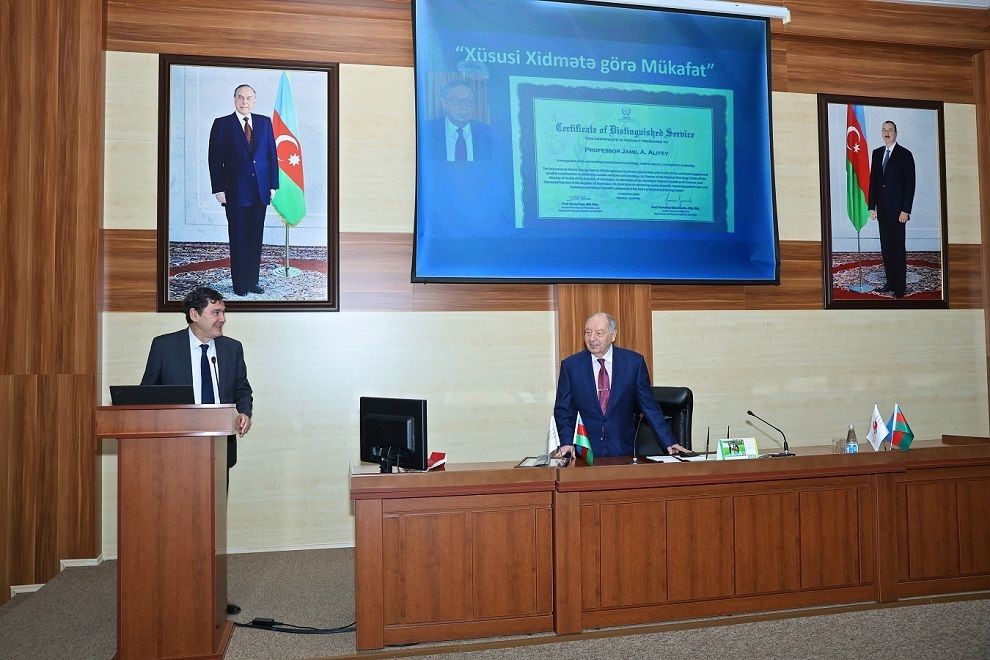
Mubariz Aliyev, a 38-year-old patient at the National Centre of Oncology (NCO) in Baku, detonated a grenade at the hospital, killing himself and seriously injuring radiologist Asif Nasirli, who later died of his injuries. The incident sparked a debate on social media about corruption at the hospital, which is headed by Jamil Aliyev, the uncle of President Ilham Aliyev.
The pro-government media outlet Qafqazinfo wrote that the explosion occurred on the first floor of the X-ray department on Thursday.
Nasirli, age 44, was the head of the Department of Pediatric Radiation Therapy at the NCO. He died of his injuries on Friday.
Later, the Prosecutor General's Office launched a criminal case regarding the incident, investigating it on charges of attempted murder, and acquisition and possession of explosive devices.
Mubariz Aliyev’s reasons behind the explosion are unknown. However, the incident sparked a public debate on Azerbaijani social media about the hospital’s exorbitant fees and corrupt practices among its staff.
Social media user Elchin Rahimzada wrote about how a doctor at the hospital took a hidden fee for an MRI referral.
‘We wanted a simple MRI (of course, the doctor there referred us), and they quoted us about ₼300 ($170). Then they gave us a small discount because of the patient’s disability. The doctor who referred us for the MRI charged ₼40 ($24). He didn’t give us a receipt or anything else. We paid ₼3,000 ($1,770) for the surgery’.
Independent journalist Aytan Mammadova also shared her experience with the NCO and stated on social media that corruption at the centre ‘has spread like mushrooms after rain’.
‘My cousin, only 25, suffers from a severe form of cancer. She was so poor that when the biopsy results came in, she couldn’t immediately come to Baku due to transport costs. After reviewing the results, the doctor asked her why she waited so long, why she hadn’t been examined on time. The poor thing couldn’t find food, so where would she get the money to go to the doctor?’.
Mammadova wrote that the centre’s pricing for examinations differed from one doctor to another, with patients being charged anywhere between ₼90 ($53)–₼250 ($150) for an examination.
‘After the examinations, [my cousin] returned to the district herself, eager to receive the CT scans. The next day, I went to pick them up’, she said, adding that she was unable to retrieve the results because the nurse demanded an additional immediate payment of of ₼92 ($54).
Every year, the state budget allocates a certain amount to support people suffering from cancer.
This year, approximately ₼62.6 million ($37 million) was allocated for this purpose to the NOC.
The budget funds allocated to the National Centre of Oncology are included in the Health Ministry’s mandatory programme. A Chamber of Accounts report tracking these funds found that ‘the mismatch between needs and demand in procurement under state programs, as well as the inability to deliver medical supplies to those in need, limit access to medical services for vulnerable populations’.
However, neither the centre nor the Ministry of Health has provided detailed reports on state procurement.