How an international economic forum highlighted Abkhazia’s dependency on Russia
While Abkhazia has investment potential, structural vulnerabilities and a key dependence on Russia limit project realisations.

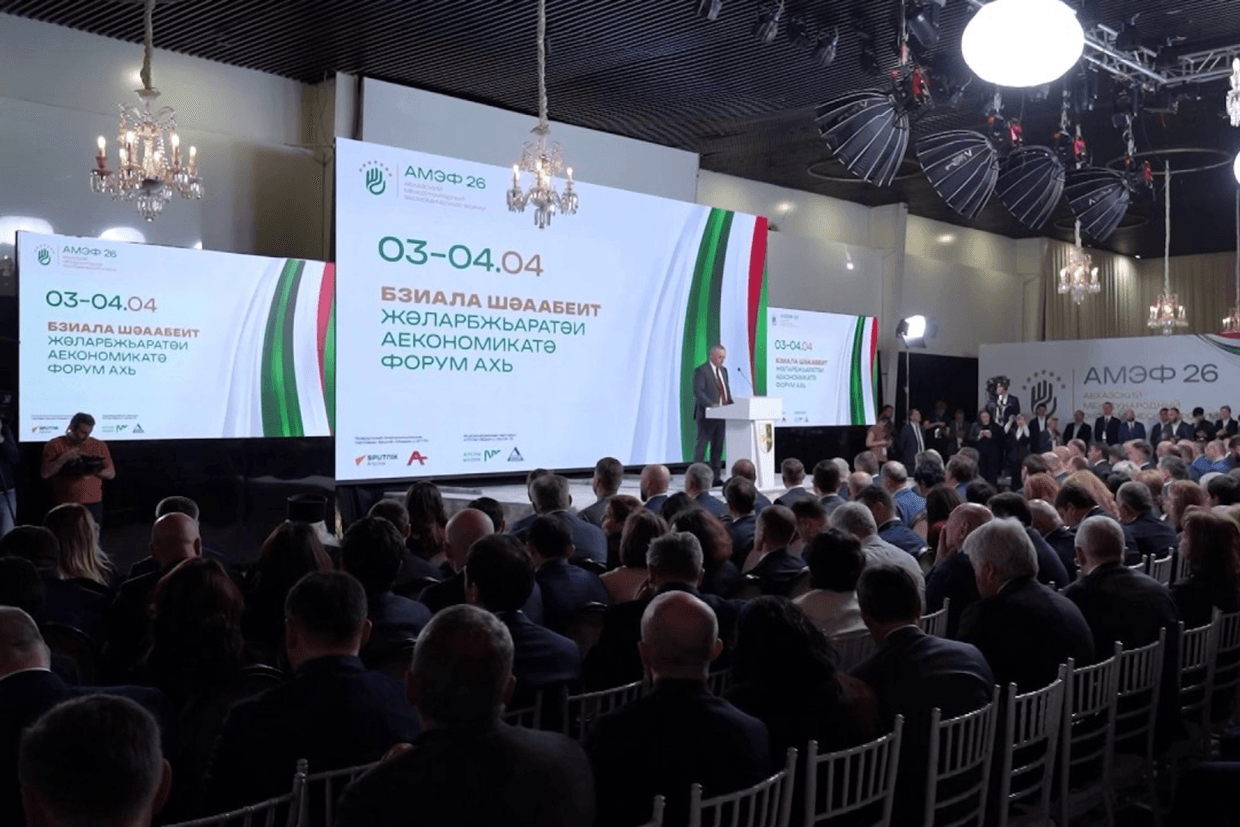
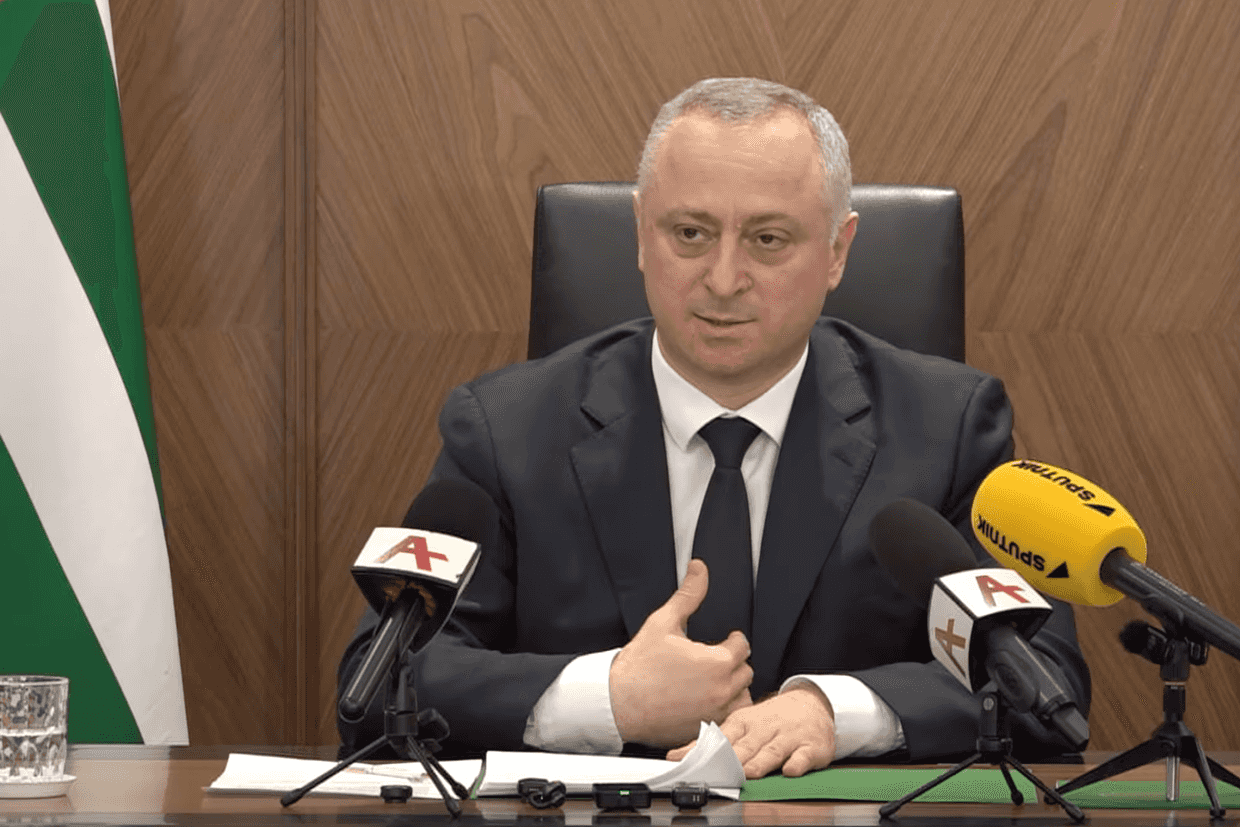
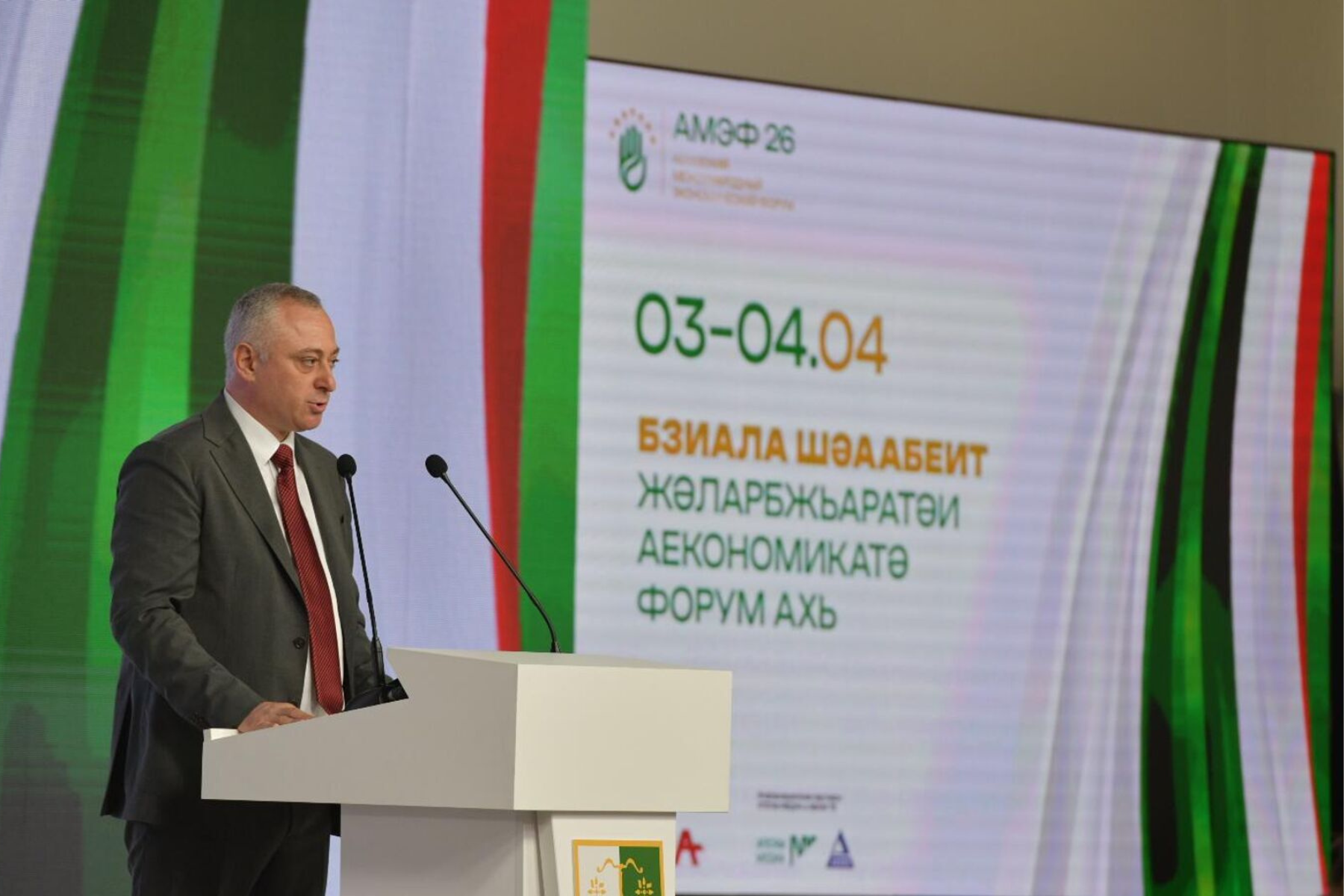
From 3–4 April, Sukhumi (Sukhum) hosted the ‘Abkhazia — Investing in the Future’ economic forum, an attempt to attract investor interest, political support, and systemic economic modernisation. However, behind the optimistic agenda highlighted by President Badra Gunba and Prime Minister Vladimir Delba lie structural limitations that are becoming increasingly apparent.
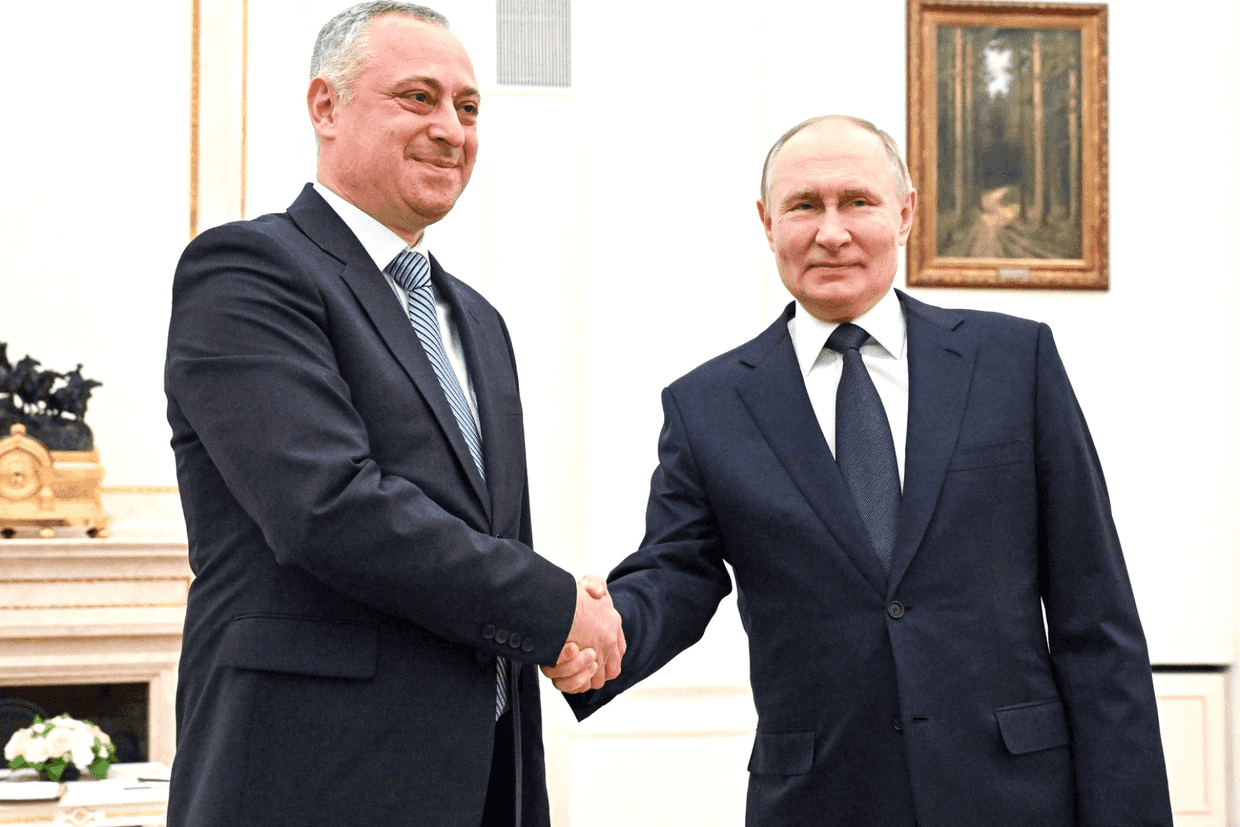
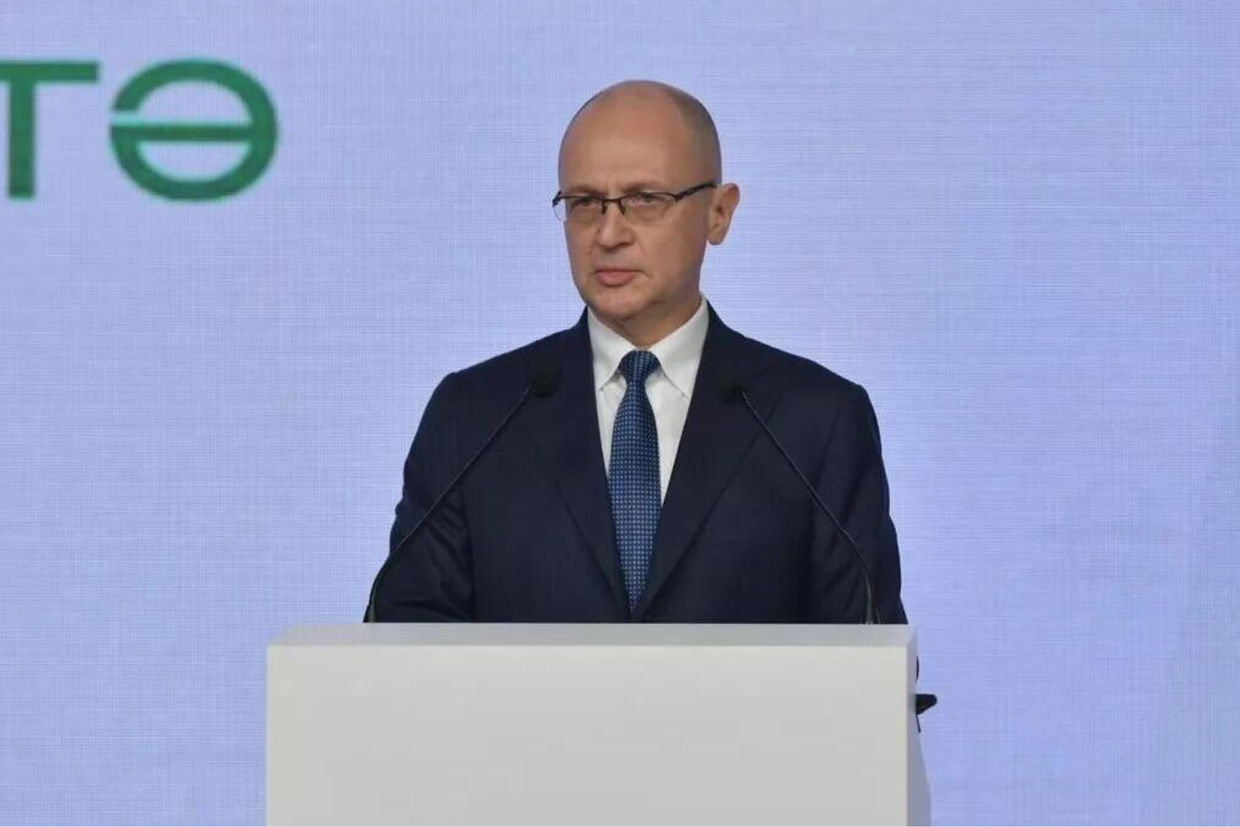
Following the forum’s conclusion, Sergei Kiriyenko, First Deputy Chief of Staff of the Russian Presidential Administration, announced potential investments of over ₽100 billion ($1.3 billion). For Abkhazia’s economy, this would be significant, comparable to several annual budgets.
However, such figures traditionally reflect intentions rather than guaranteed investments. The main question is not the volume of declared funds, but the economy’s ability to absorb them — that is, to provide infrastructure, project management, and a return on investment.
Kiriyenko directly identified the main risk involved while speaking to journalists during the forum’s concluding press briefing — that investors will not wait.
‘You have to understand that an investor will not wait. He will turn around and run off to Krasnodar Krai or some other neighbouring regions. Today, domestic tourism in Russia is developing very rapidly. And a holy place is never empty; it will be filled’, Kiriyenko warned.
Indeed, even short-term delays in decision-making can lead to a redistribution of capital, primarily in favour of Russian regions where the situation is more predictable.
Formally, this is about standard requirements. These include, for example, clear rules, quick decision-making, and the enforcement of legislation. However, it is precisely these elements that remain vulnerable. As Kiriyenko emphasised, ‘It is necessary to have competitive legislation […] and its enforcement’.
In practice, this means the need for not just reforms, but a change in management culture, from the selective application of norms to a universal system. Otherwise, even signed agreements risk remaining at the level of declarations.
A dependence on Russia
Abkhazia’s economic model critically depends on Russia as a source of investment, budgetary support, and infrastructure solutions. The Russian side finances energy, transportation, and the social sphere, and effectively ensures the stability of key systems. This creates a foundation for growth, but at the same time forms a one-sided dependency.
Kiriyenko articulated this model quite straightforwardly during the forum: ‘[Russia] helps those who do something themselves’.
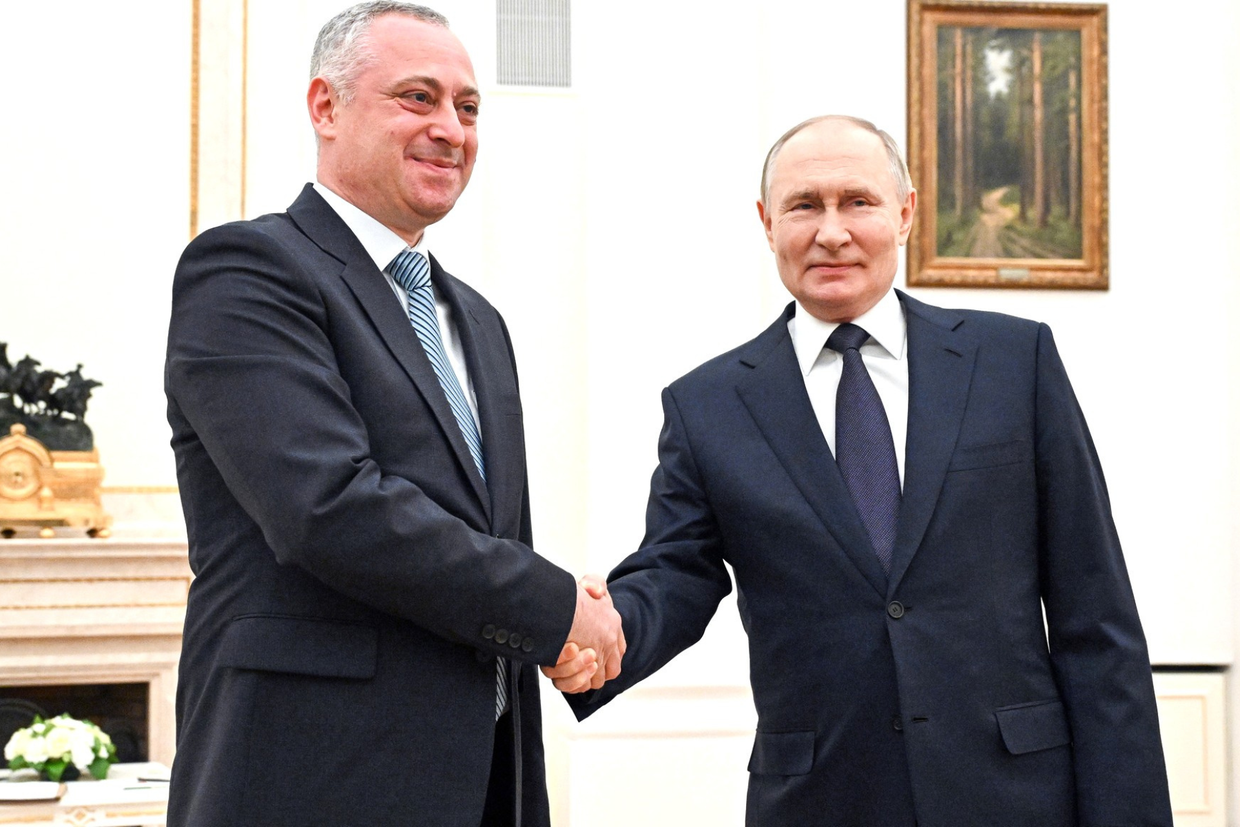
His comments can be understood as an attempt to transition the Russian–Abkhazian relationship from unconditional support to conditional support, dependent on the effectiveness of Abkhazia’s own actions.
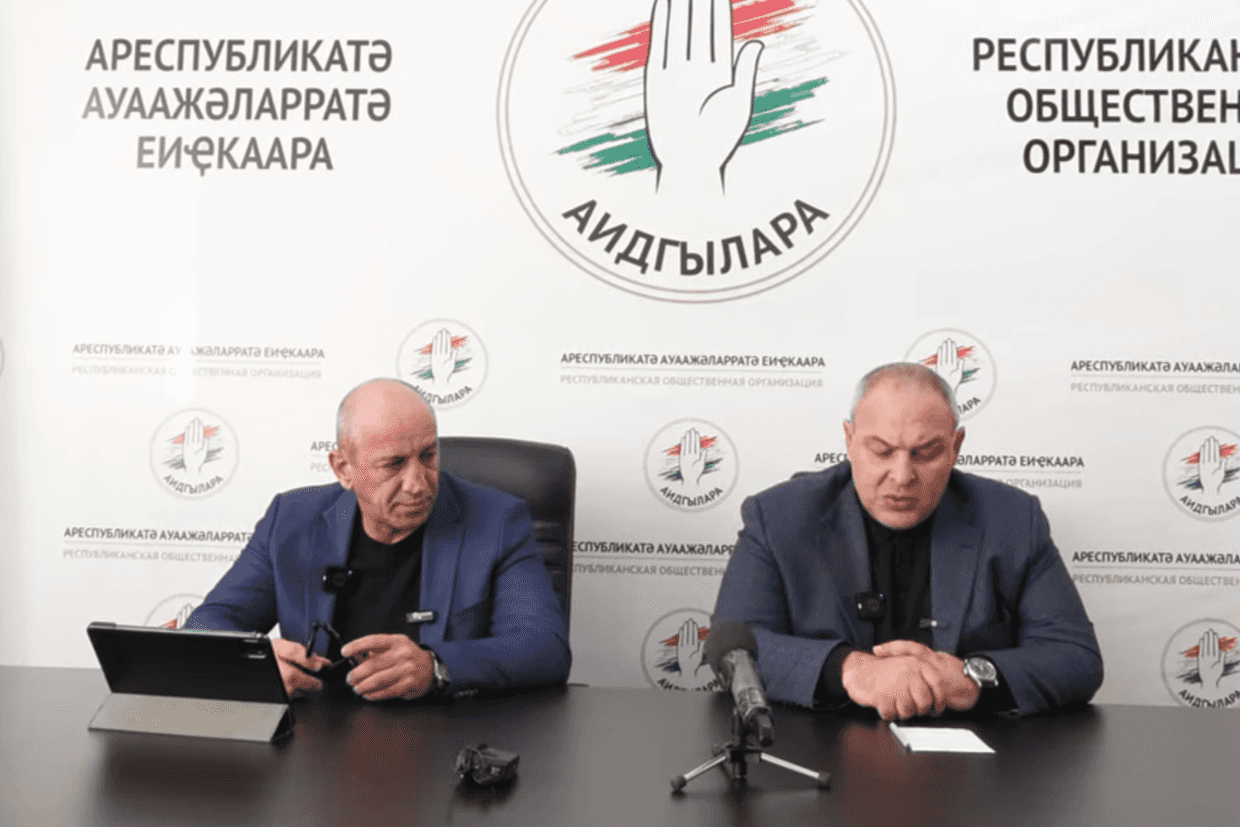
As former Abkhazian Economy Minister and now opposition figure Adgur Ardzinba wrote on Telegram following the forum, ‘the Abkhazian side must be prepared to work proactively and quickly translate these opportunities into results’.
‘And here lies the key problem’, Ardzinba argued. ‘Moreover, the problem is systemic. Everything being implemented in Abkhazia today is primarily a Russian initiative. But on the ground, there is a chronic deficit not only in implementation, but also in initiative itself. Instead of strategy, there is the plugging of holes. Instead of development, there are ongoing trivialities. There is no large-scale, and most importantly, systemic vision.’
Yet at the same time, Abkhazia has virtually no alternative sources of capital, which increases the vulnerability of its economy to changes in Russian policy.
As Russia increasingly strips Abkhazian opposition figures of Russian citizenship and places others on the list of foreign agents, any space to criticise the Kremlin’s initiatives is increasingly shrinking.
 OC Media
Key vulnerabilities within Abkhazia
Beyond a high reliance on Russia in a number of sectors, Abkhazia’s own infrastructure carries a number of risks, one of the most apparent being Abkhazia’s energy crisis.
The 2025–2026 winter, which passed without noticeable outages, was an important achievement — yet, as Gunba has himself highlighted, the energy grid still faces high losses, inefficient consumption, and outdated infrastructure.
‘Extensive work is being carried out to reconstruct the energy system, metres are being installed, but even with strict energy conservation, there won’t be enough to cover all the planned projects’, Gunba said during the forum.
Without deep reform, including payment discipline and network modernisation, the energy sector will remain a growth constraint.
For investors, this is a key risk, as unstable energy supply makes long-term projects impossible.
‘New development projects, agricultural processing plants, industrial facilities, logistics terminals, new hotels and resorts, they all require electricity’, Kiryenko highlighted in turn. ‘No one will invest if they can be cut off at any moment due to the instability of the energy system’.
Moreover, the entire economy of Abkhazia remains structurally vulnerable, largely because its main drivers — tourism and agriculture — are subject to external and seasonal risks.
While there have been attempts to diversify the economy, they have so far been limited in scope. Even the development of fruit and vegetable processing, which is being prioritised, requires investments, technology, and stable infrastructure. Indeed, while Gunba outlined the strategy Abkhazia intends to follow during the forum — that ‘products should be exported in their finished form’ — the transition from a raw material model to a processing model is a long and capital-intensive process.
In turn, while the tourism sector is showing growth, it remains seasonal. And while Kiriyenko has acknowledged that Abkhazia has the potential to become a year-round resort, the transition to such a model would require qualitative change, namely, improving the level of service, developing infrastructure, and increasing the average cheque.
OC Media
Finally, while the development of transport infrastructure — including the re-opening of Sukhumi’s airport and the modernisation of customs logistics — mark some of the few obvious successes, they do not alone create an economy. While barriers may be lowered, without the parallel development of business and production, the effect will be limited.
A high-risk opportunity window closing
Based on the number of vulnerabilities that exist, a key takeaway for investors following the forum’s conclusion seems to be that while Abkhazia has potential, this does not guarantee project realisation.
Decisions are made slowly, institutions work inconsistently, and there are risks of selective application of laws and regulations, which is critical in a highly competitive investment environment.
Abkhazia is indeed at a point where an economic leap is possible. There is investor interest, political support, and reforms have been initiated. However, the window of opportunity is time-limited and closely tied to the system’s ability to change.
If the initiatives announced at the forum are implemented, Abkhazia may transition to more sustainable growth. If not, the current interest from investors will remain a short-term episode, and the economy will continue to depend on external support and a limited range of industries.
The main question today is not the presence of potential, but the ability to realise it.
For ease of reading, we choose not to use qualifiers such as ‘de facto’, ‘unrecognised’, or ‘partially recognised’ when discussing institutions or political positions within Abkhazia, Nagorno-Karabakh, and South Ossetia. This does not imply a position on their status.